
A Better Path to Improving Access to Housing for our Friends and Neighbors
Updated: Feb 20
All individuals, regardless of race, income, and gender, deserve a safe place to sleep. With a lack of affordable, available housing, a large number of individuals are feeling the threat of displacement and housing instability, which can lead to a higher risk of houselessness[1]. Even if an individual is employed, that does not mean they can easily find affordable, permanent shelter.[2] Many Montana families, including our friends and neighbors, are affected by the unaffordability of the current housing market. Despite research showing that supportive housing policies are more effective than punishing fines and arrests, locally, state-wide, and federally, laws penalizing those experiencing houselessness and sleeping outdoors have increased.
Houselessness can affect anyone, regardless of age or race, and has continually increased in Montana over the past 5 years. Montana has more than 2,000 active individuals experiencing houselessness on any given day. Most individuals who move out of houselessness find a rental with the help of an ongoing housing subsidy, but this process takes an average of 91 days.[3] Montana needs to continue investing in solutions to the housing crisis by providing state funding to programs that promote the development of low- and middle-income housing.

Recent Court Decision Allows Ineffective Policies
Two court cases prior to 2024 ruled that municipalities could not make houselessness and sleeping outdoors illegal if adequate shelter is not available.[4] In 2024, the Supreme Court ultimately reversed the lower court decision, which resulted in cities and municipalities being able to punish houselessness through fines, fees, and potential jail time.[5] Sleeping unsheltered can include places on the street, in the park, or other places not intended for sleeping, making it more visible than sleeping in a shelter or in transitional housing.2 According to the National Homelessness Law Center, since the Supreme Court ruling in 2024, 260 laws penalizing homelessness through fines, fees, and jail time have been passed in cities nationwide. [6]
Arresting or fining houseless individuals perpetuates the crisis rather than addressing it.
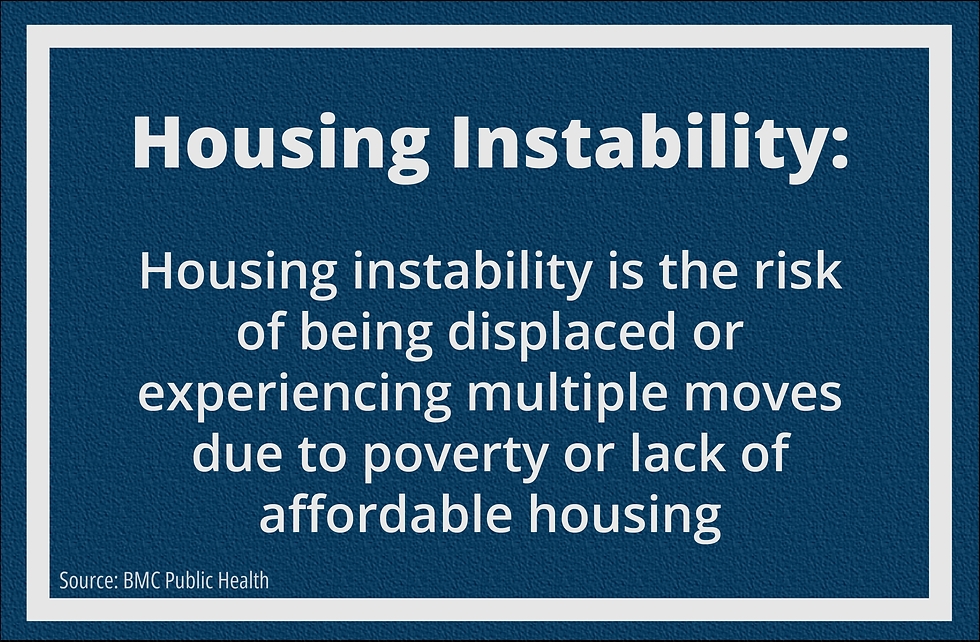
Fortunately, there are proven state-level policies that can help improve housing stability, thus reducing houselessness. These policies include the creation of affordable and accessible housing through state investments, as well as promotion for housing support programs that help individuals find and stay in housing. Without this, we will continue to see a larger number of individuals experience housing instability, leading to a higher possibility of houselessness.
Historic Disinvestment and Discrimination Have Resulted in Houselessness Falling Disproportionately on Communities of Color
Decades of systemic racism have contributed to stark income disparities, leaving people of color more likely than white households to live on extremely low incomes, particularly when it comes to housing costs.[7] Houselessness also affects Montanans of every age, and 13 percent of these individuals are seniors.[8]
Tribal Nations are facing a severe housing crisis caused by the U.S. government’s long history of disinvestment and its continued failure to fully uphold trust obligations. In an extensive 2017 study of housing conditions in Indian Country, HUD reported that “the lack of housing and infrastructure in Indian Country is severe and widespread, and far exceeds the funding currently provided to tribes.”[9] A lack of economic development and opportunity contribute to poor housing conditions. These and other historical factors have resulted in a system where a disproportionate number of houseless individuals in Montana are American Indian/Alaska Native. American Indian/Alaska Native individuals make up 15 percent of the documented houseless population, but only 6 percent of the total population.
Penalizing Houselessness Exacerbates Houselessness
Criminilizing houselessness not only prolongs the issue but also wastes public resources and causes harm to the health and well-being of those affected. These policies have double the impact on people of color, who are disproportionately affected by houselessness and more likely to be targeted by law enforcement.[10]

Arrests and tickets for houselessness can end in displacement, disrupting individuals’ ability to access needed services and maintain belongings necessary to live and hold down employment. Displacement disrupts support networks and pushes people further away from community resources. Often, social service providers rely on knowing an individual’s location to get them resources, like medications. Property seizures also complicate efforts to leave houselessness when items vital to keeping jobs and housing, like IDs and legal documents, have been seized.7
Ordinances penalizing houseless individuals do not result in a statistically significant decrease in houselessness in the years following the passage of an ordinance, compared to communities that have no such ordinance.[11] Communities with and without these laws experience similar trends in houselessness rates over time, despite attempts to impose costs on those sleeping outdoors.2 Monetary sanctions, fines, and fees placed on individuals experiencing houselessness by municipalities can create a cycle between houselessness and incarceration. Such financial penalties directly affect an individual’s ability to pay for the necessities of life, like food, transportation, and health care.
Some communities have embraced collaboration with shelters and other service providers, helping to bring positive change to houselessness. The Helena Police Department is one positive example of collaboration with local shelter and service provider, Our Place, as an effective way to help individuals experiencing houselessness thrive despite circumstances (see text box).

Investing in Solutions to Improve Houselessness is Cost-Effective
Supportive housing investments are a much more cost-effective solution to reducing
houselessness than fines and arrests. Taxpayers pay $31,065 each year of arresting and ticketing a single individual for experiencing houselessness, while the cost of providing them with supportive housing would have been $10,051 annually.[12] According to a 2015 study on the cost of criminalizing homelessness in Spokane, Washington, the city spent an estimated $1,300,000 over a 5-year period to enforce only 75 percent of the city’s criminalization ordinances, more than it would have cost to provide housing for individuals experiencing houselessness.[13] Fines are not cost-effective, as they often go unpaid and cost more for municipalities to uphold. In many places, the cost to issue a citation is more expensive than the citation amount itself. Citations can continue for individuals experiencing houselessness, even if they are unable to pay. Multiple citations can lead to escalating fees, bench warrants, damaged credit, and possibly jail time. In Seattle, debt due to legal fines prolonged houselessness by nearly two years.6
Investing in Solutions to Houselessness Can Improve Outcomes for the Next Generation
According to the Child and Youth Homelessness Data Profiles, in the 2022-2023 school year, Montana had 4,898 homeless students. Students who are houseless face additional barriers to school attendance, which may lead to higher chronic absence rates. Chronic absence is when a student is missing 10 percent or more school days for any reason - excused or unexcused. In the 2022-2023 school year, for Pre-K through 12th grade, 64 percent of houseless students in Montana were chronically absent, compared to the national average of 48 percent.14 Policies that help reduce houselessness for Montana families would improve educational outcomes for Montana students which can follow students throughout their lives, leading to better employment opportunities, ability to complete higher education, and ultimately a stronger economy.
Annually, Montana receives $399,527 to support the educational needs of houseless students, but this only reaches 26 of 479 school districts.[14] Without larger investments in supporting students experiencing houselessness, Montana will continue to see funds that reach only around 5 percent of the school districts.

Housing First Policies Provide Solutions that Support Houseless Individuals
Montana would be better equipped to reduce houselessness by adopting policies in line with the Housing First model. Housing First is “a recovery-oriented, evidence-based philosophy and approach that recognizes that housing is a basic human right, and that people are better equipped to make progress in their lives if they have a safe, stable place to live”.[15] Housing First is often implemented through two forms of housing:
Permanent Supportive Housing- aimed at families and individuals who have experienced long-term houselessness and have chronic medical illnesses, mental health conditions, or substance use disorders. Permanent Supportive Housing has a growing evidence base proving its efficacy, with a one-year housing retention rate up to 98 percent.[16] According to the MT Healthcare Foundation, permanent supportive housing programs in Montana have a 48 percent reduction in detention center costs, a 3.8-fold reduction in emergency room visits, and a 6.7-fold reduction in total health care costs for individuals after six months of housing.[17] In a Permanent Supportive Housing community in Bozeman, there was a 50 percent reduction in emergency room visits and significant improvements in mental health and employment stability.[18]
Rapid Re-Housing- offers short-term assistance and is designed to move people into permanent housing as quickly as possible, with the goal of keeping them there.[19]
Housing First has an average cost savings on emergency services of $31,545 per person over two years and could cost up to $23,000 less per consumer per year than a shelter program.19 A study in Charlotte, North Carolina, found that the city saved $2.4 million over a year by creating a Housing First facility. Their tenants spent 1,050 fewer nights in jail, 292 fewer days in the hospital, and had 648 fewer visits to the emergency rooms.[20]
Conclusion
Montana should learn from other states and invest state funding in housing support programs, such as Housing First, Permanent Supportive Housing, and Rapid Rehousing, while supporting shelters that provide temporary housing for individuals who utilize these programs. With the support of these programs, more individuals in Montana will be able to find an affordable and accessible home that provides a safe space to sleep. State investments to increase community shelter capacity for the houseless population are needed to help reduce houselessness. Fiscal investments can support not only shelters but also congregate support centers to help individuals access and use resources that facilitate their return to housing.
Neighboring states, such as North Dakota, are investing state funding to support services including emergency shelters, transitional housing, houselessness prevention programs, and rent and utility assistance.[21] This bipartisan investment in houselessness solutions is an inspiring example of the investments Montana should be making to reduce houselessness.
[1] Center on Budget and Policy Priorities, “Rising Homelessness Highlights Need to Invest in Proven Solutions, Reject Policies That Worsen Homelessness and Housing Instability”, January 2025.
[2] National Alliance to End Homelessness, “Employed and Experiencing Homelessness: What the Numbers Show”, September 2022.
[3] Montana Coordinated Entry System, “Homelessness in Montana”.
[4] Shelterforce, “What the Grants Pass Case Means- For All Of Us”, April 2024.
[5] Johnson V. Grants Pass, “The Supreme Court casae that made it a crime to sleep outside”, 2025.
[6] Shelterforce, “Criminalizing Homelessness Doesn’t Work, Study Finds”, July 2025.
[8] MBPC calculations using Montana Coordinated Entry System, “Homelessness in Montana”, Dec. 8, 2025, on file with author.
[9] “FY 2017 Congressional Justifications,” U.S. Department of Housing and Urban Development, 2017.
[10] DuBois, Herbert, Sowards, “Criminalizing Homelessness Worsens the Crisis, Rearch Shows”, 2025.
[11] Lebovits, Sullivan, “Do Criminalization Policies Impact Local Homelessness?” April 2025.
[12] Fraieli, Andrew, “The Cost to Criminalize Homelessness”, May 2021.
[13] Howard, Rankin, Tran, “At What Cost: The Minimum Cost of Criminalizing Homelessness in Seattle and Spokane”, 2015.
[14] SchoolHouse Connection “Child and Youth Homelessness Data Profiles”, 2025.
[15] Ranney, “What is Housing First”, 2022.
[16] National Alliance to End Homelessness, “Housing First”, March 2022.
[17] Montana Healthcare Foundation, “2022 Annual Report”, 2022.
[18] Smith, Eleanor, Central House Strategies, “RE: Data for fact sheets,” email to Eleanor Smith, MBPC, Nov. 26, 2025, on file with author.
[19] National Alliance to End Homelessness, “Rapid Re-Housing”, October 2016.
[20] Tars, Eric “Criminalization of Homelessness”, 2021.
[21] Steurer, Mary, “ND non profits receive more state funding to fight homelessness, but needs remain high”, September 2025.


Thank you for such an insightful article. The statistics, like the 91-day average to find housing with a subsidy, really put the struggle into stark relief. After digesting all this important information, I sometimes like to clear my head with a logic puzzle. The MeowdoKu Game Online is a fun and relaxing way to do that.
The point about a lack of economic development contributing to poor housing conditions in Tribal Nations really hits home. It makes you think about all the factors that lead to housing instability. On a completely different note, if you're ever looking for a way to unwind after reading such heavy but important topics, the Online StonkRider Game For Free is surprisingly engaging and a good brain break.
The section about the historic disinvestment and its impact on Tribal Nations is incredibly important and often overlooked. It really puts the current crisis into perspective. To illustrate such complex issues, I sometimes use a Zeva AI Image Generator to create visuals that help convey the message more powerfully.
It's especially concerning that 13 percent of individuals experiencing houselessness are seniors, highlighting the vulnerability of older populations. This article really stresses the need for more supportive programs. Speaking of support, I recently came across a knee brace support from Mr. Joint Patch that's been quite useful for my daily activities.
This article brings up so many critical points, especially about how houselessness disproportionately affects communities of color and seniors. The statistics are really powerful. If you're ever dealing with image files, specifically HEIC ones for visuals in posts, you might find a tool like Heic to MP4 helpful for converting them for various uses.